

Once a part is scanned, someone still has to decide what “the CAD” means. That choice is the largest cost driver in reverse engineering after the capture itself.
Mesh only
A watertight or near-watertight mesh (STL/OBJ and similar) stays closest to measured geometry. Use it for visualization, many additive workflows, and mesh-native tools. It is usually the fastest path. It is a poor handoff if your team lives in SolidWorks features and 2D drawings.
NURBS surfaces
Surface models approximate the scan with patches. Files shrink. Import into NX, SolidWorks, and CAM is practical. We see this often for airfoils, housings, and as-built geometry headed to CFD or FEA.
Feature-based (parametric) solids
Holes, bosses, fillets, and patterns become editable features. This is the right product when you will revise the design, cut a drawing, or drive conventional machining from a feature tree. It takes more modeling time because we are interpreting design intent, not only draping surfaces on a point cloud.
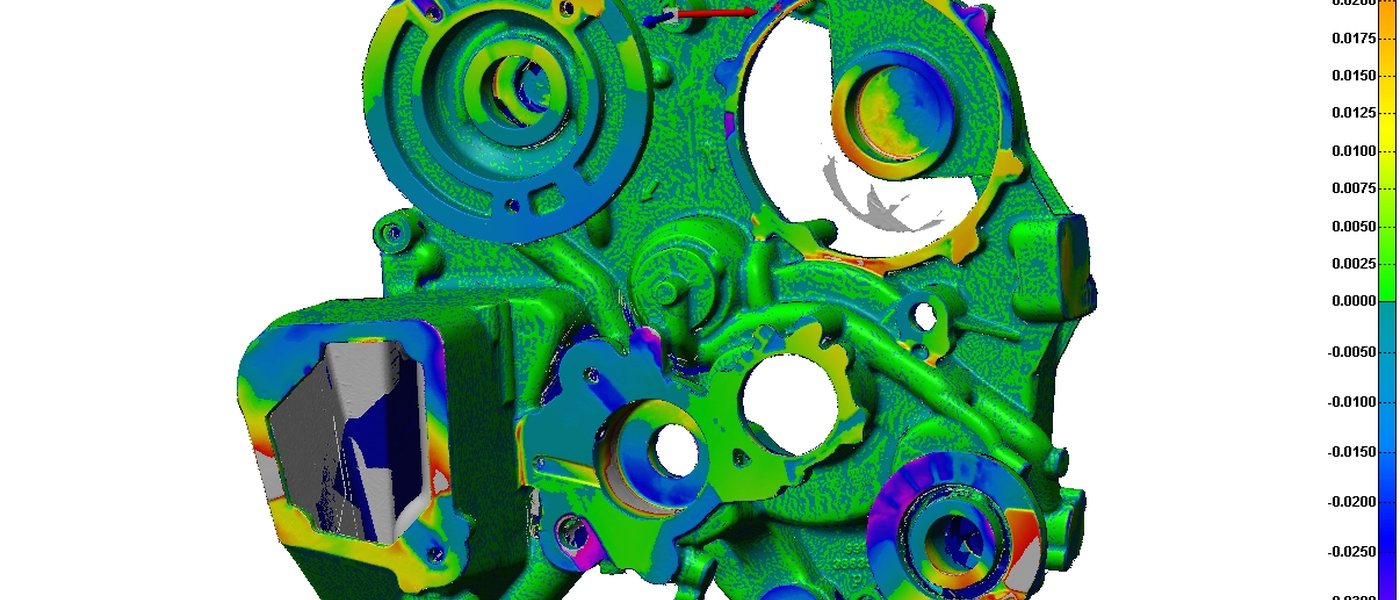
Hybrid
Cast, molded, or sculpted regions stay as surfaces; functional bores and mounts become features. That is a common Bolton Works package for industrial and aerospace hardware.
If you are unsure, say the downstream tool and the first manufacturing step. We will recommend a type on the reverse engineering quote rather than defaulting to the most expensive model.
— Bolton Works